
Hi! I am Mia, and I’ve been an early childhood educator in New York and California since 2016. This summer, my family and I moved back to Chengdu, China, the city where I grew up. In September 2026, my daughter, Mumu, started kindergarten there.
Before going back, my understanding of Chinese education was shaped by my own childhood experiences. I pictured a system that prioritized academics, from memorizing Chinese characters to honing test-taking skills. I also associated Chinese schools with strict classroom rules, structured discipline, and a teacher-centered learning environment.
But returning to China has challenged many of my assumptions. Watching Mumu’s daily kindergarten experiences makes me discover the significant changes Chinese early childhood education have gone through. Here are three things that surprised me most.
1. Life Skills Are Part of the Curriculum
In this kindergarten in China, the weekly learning plan includes daily routines, physical activities, play-based learning, and weekly academic learning goals.
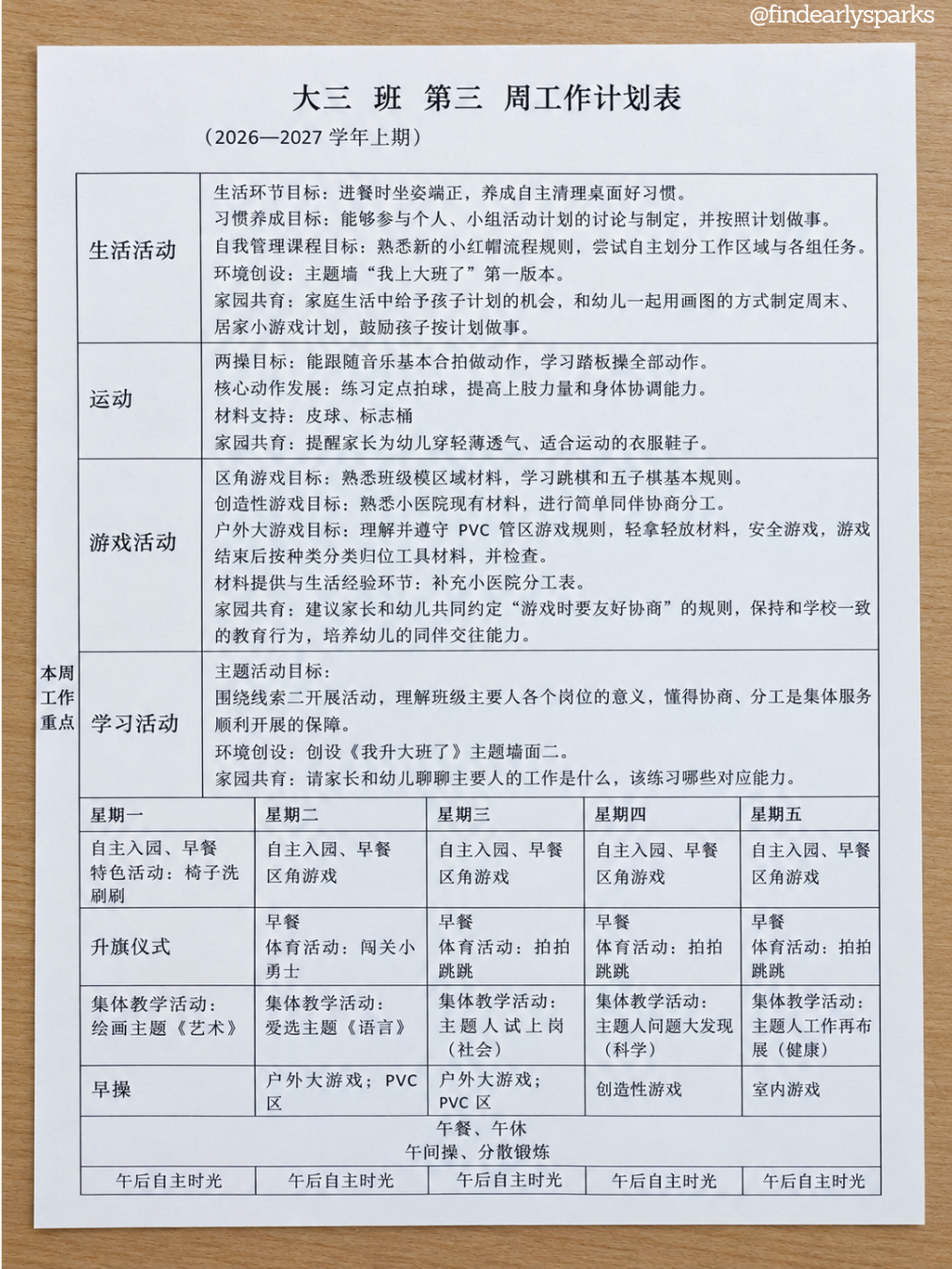
I noticed that everyday life skills is an important part of the curriculum along side with literacy and math. Children were expected to practice practical skills, like making their own beds before nap time and tidying their hair after waking up.
These life skills lessons are embedded in daily life to help children develop independence, responsibility, and attention to detail at an early age of 4.
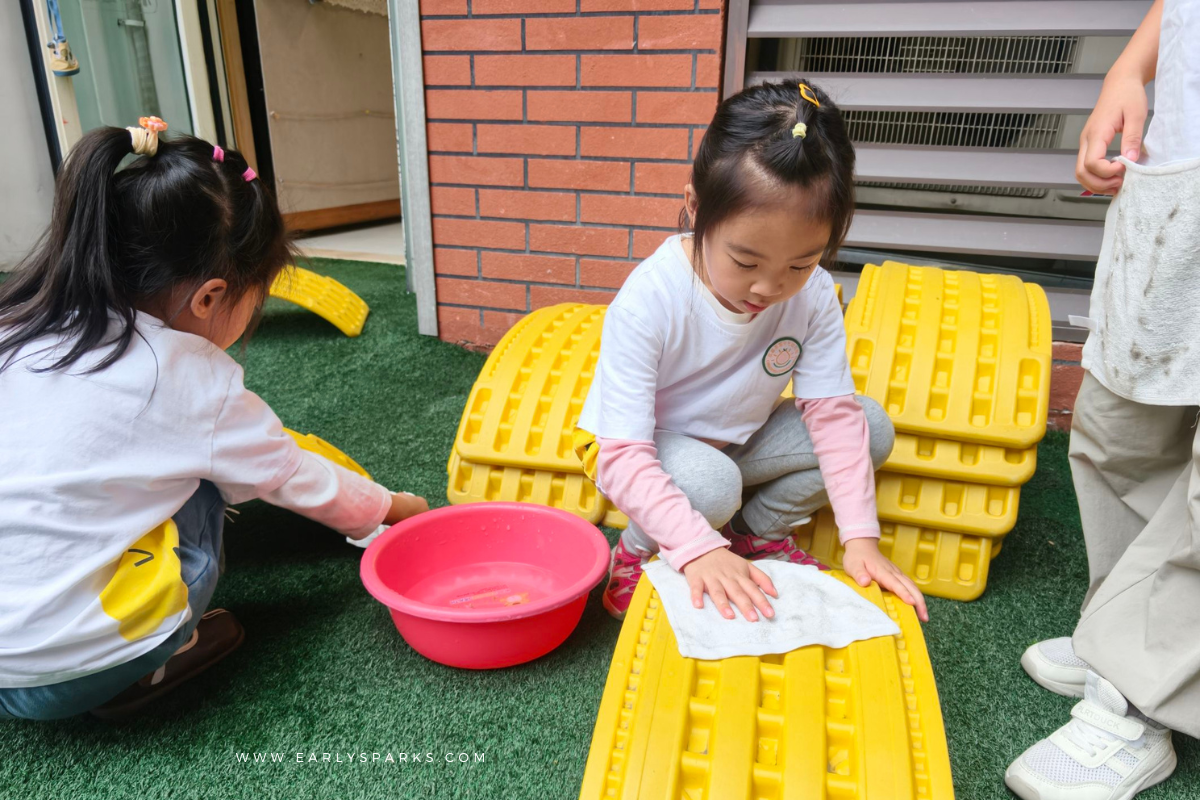
What I love most is seeing these habits carry over beyond the classroom! I’ve noticed Mumu taking more initiative in caring for herself and her surroundings at home, too, such as rinsing her mouth after meals and keeping her belongings in the dresser organized.
2. Learning Happens Through Free Play
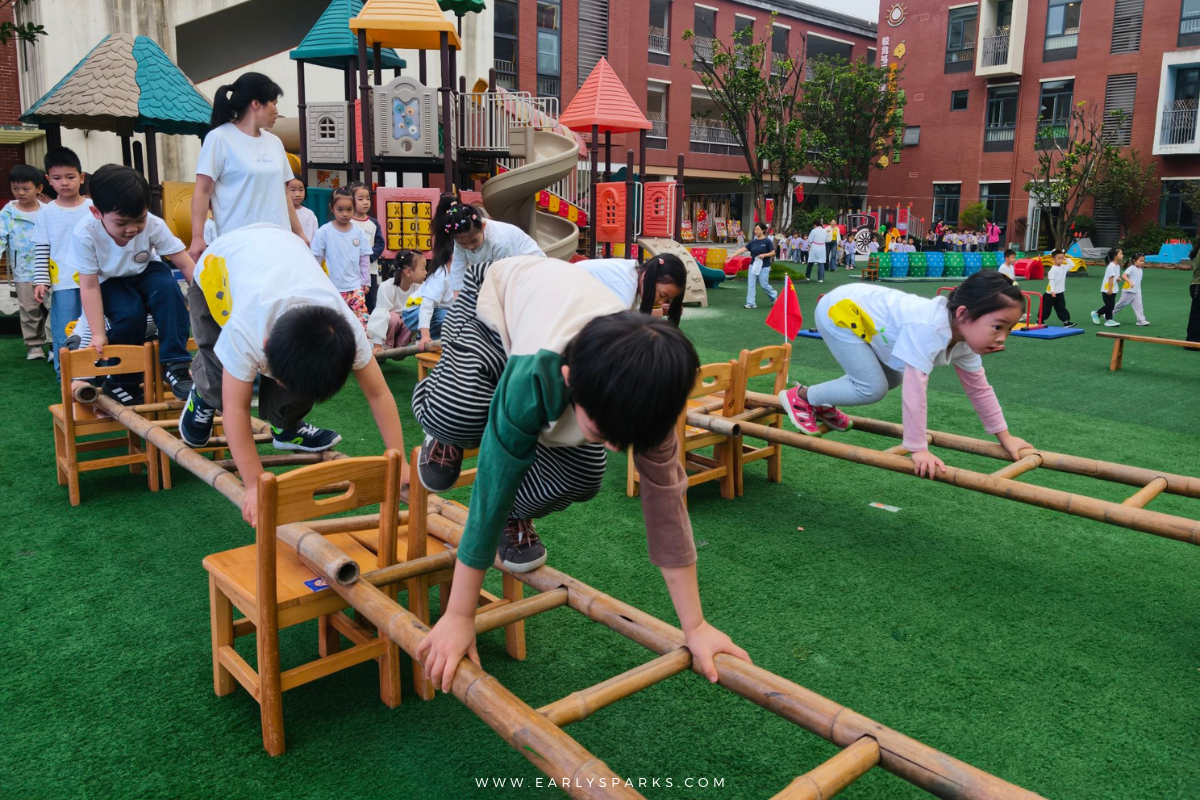
There are so many spaces in Mumu’s kindergarten designed for exploration and play, including water play areas, sand pits, PVC pipe play areas, and drawing centers. Even the hallways are used for imaginative play, with pretend settings like a tea house, a hospital, and a barbecue restaurant. Every space invites children to explore, create, and learn through play.
Some activities are guided by teachers, while others are set up as free-play stations where children can choose what they want to explore each day.
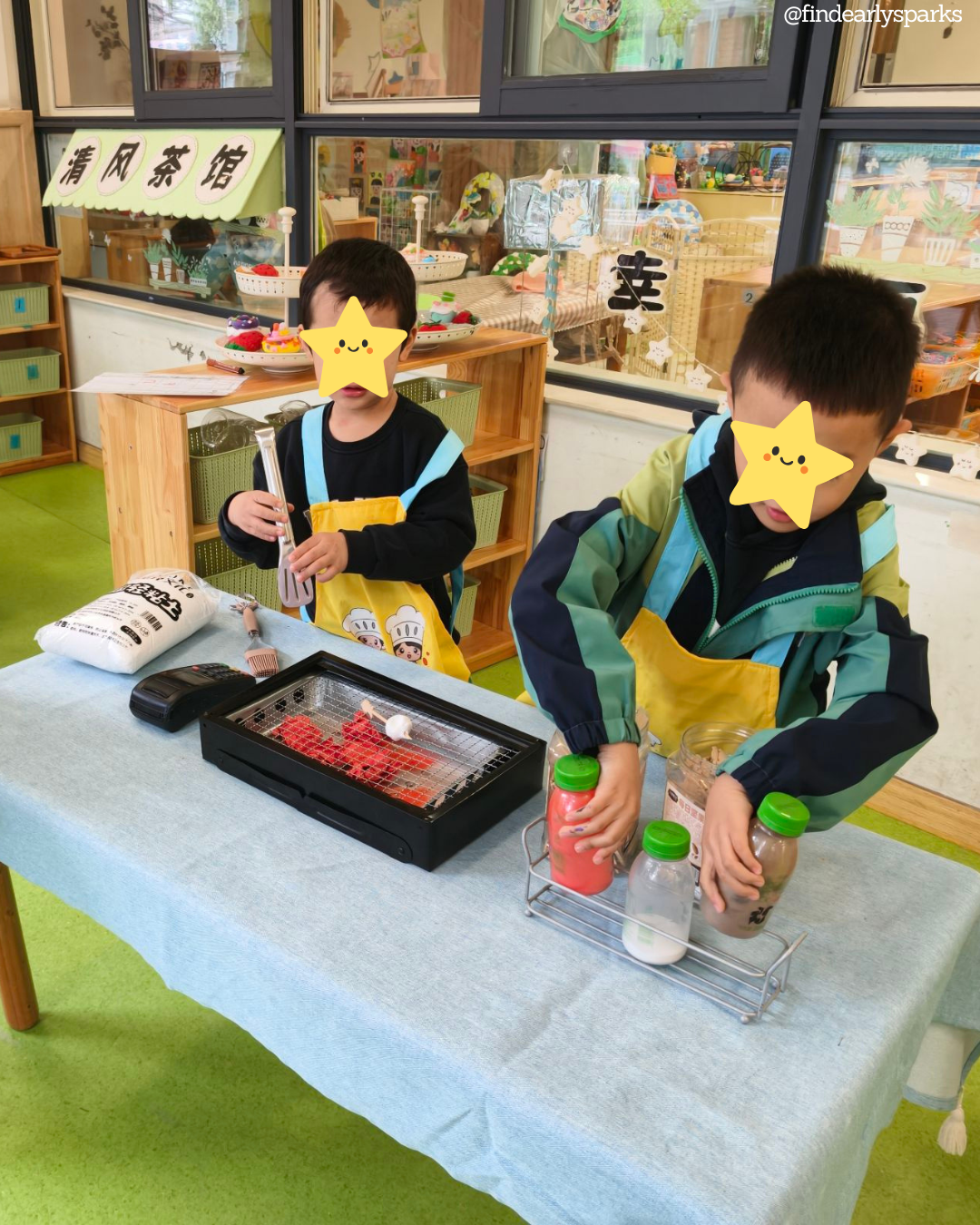
I’ve always believed that learning shouldn’t be limited to books and worksheets. Especially in early childhood, hands-on experiences and purposeful play help build a strong foundation for future learning. Seeing how much room Mumu’s kindergarten makes for play has reminded me just how much young children can learn when they have the freedom to explore.
3. Collaboration Happens Through Real-Life Experiences
The last thing that surprised me was how intentionally children were encouraged to work as a team in this school in China.
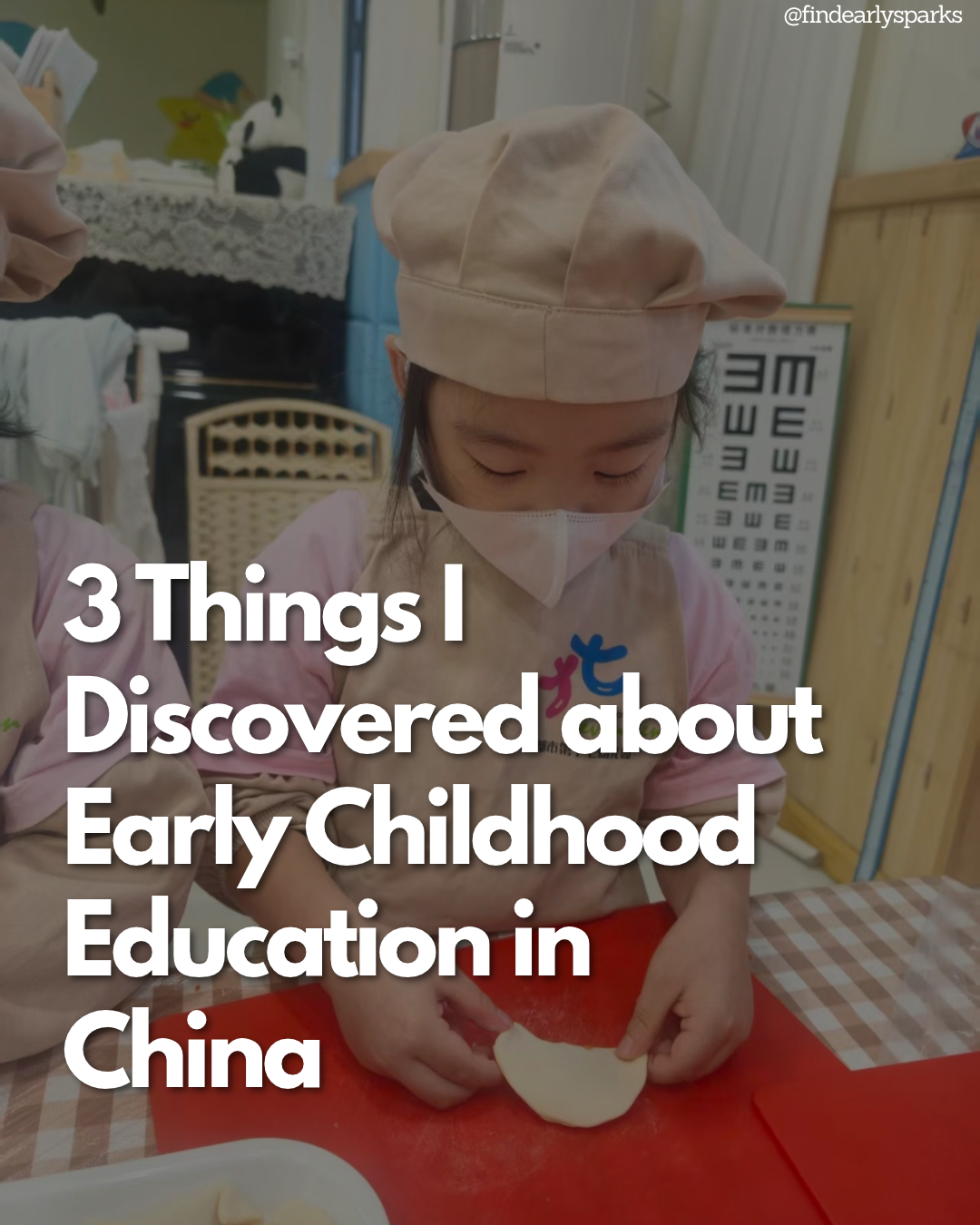
Every Friday, the school held an activity called “Dough Time,” where children worked together to make dumplings. Mumu told me that each group first sat down to discuss who would do what. They came up with questions to make sure everyone had a role: “Who would get the dumpling wrappers? Who is in charge of the filling? Who would move the chairs? Who would clean the tables when we’re done eating?”
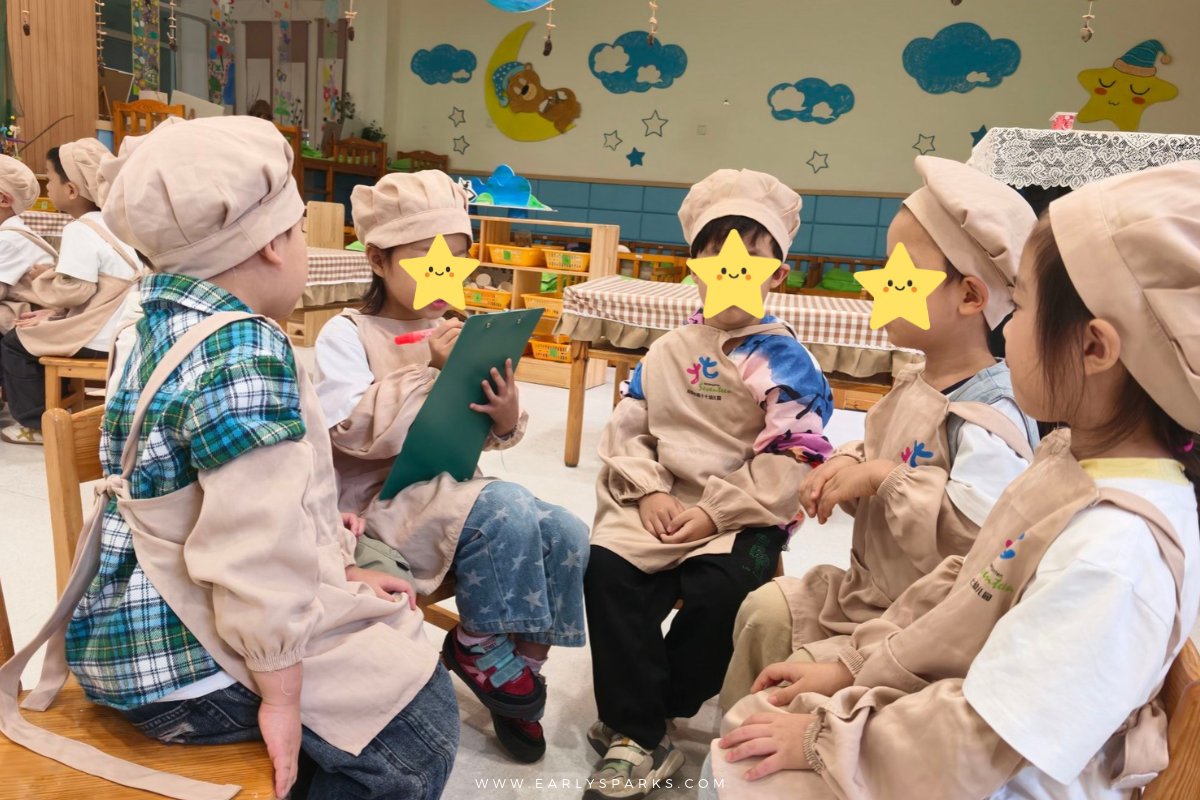
I was amazed by how much thinking and planning went into this activity. The children weren’t just assigning roles. They were learning to share ideas, listen to one another, work through disagreements, and make decisions as a group. They were learning what it really means to be a team!
This meant a lot because children don't develop collaboration skills simply by sitting together or completing separate tasks at the same table. They need real opportunities to communicate, solve problems, and work toward a shared goal that they actually care about. Activities like this give children a meaningful way to practice these skills from an early age.
Final Thoughts
Moving back and watching my daughter experience kindergarten has given me a new perspective on early childhood education in China.
As an educator who has worked with young children in the U.S. for years, I’ve found myself reflecting on what I’ve seen in both countries. I’m still learning from Mumu’s experience, and I look forward to sharing more of what I discover along the way. I may even explore some of the similarities and differences between early childhood education in China and the U.S. in a future post!
More Blogs on Raising Bilingual Children:
Chinese Learning Resources You May Like

Help your Chinese learning students build a solid foundation in reading and writing with this 50 Chinese Characters packet! This resource is designed for Chinese beginning learners to practice recognizing, writing, and using these 50 common Chinese characters. It's fun and easy to use. Each character worksheet includes the following activities: rainbow tracing, drawing pictures and adding English to show meaning, word search, word tracing and writing, phrase tracing and writing, sentence reading, and writing.
‼️Please download the file within 24 hours after your purchase. The link will EXPIRE after 24 hours. If the file expired and you couldn’t have access, send us an email at info@earlysparks.com and we will be glad to assist you! ‼️

This Chinese picture dictionary is the perfect tool for your Chinese language learners to expand their vocabulary and develop their everyday writing skills in Chinese.
This resource includes 30 themed picture word bank pages—available in both color and black-and-white versions. It's a great addition to your Chinese writing center or for use during independent writing time!
‼️Please download the file within 24 hours after your purchase. The link will EXPIRE after 24 hours. If the file expired and you couldn’t have access, send us an email at info@earlysparks.com and we will be glad to assist you! ‼️

These NO-PREP reading passages and questions are perfect tools to build your Chinese learners’ Chinese character recognition, vocabulary, reading comprehension skills, and fluency. We also provide you a list of characteristics of the leveled readers and recommendations about how you can best assist them at their levels, which makes this bundle perfect for Chinese teachers and homeschool parents.
‼️Please download the file within 24 hours after your purchase. The link will EXPIRE after 24 hours. If the file expired and you couldn’t have access, send us an email at info@earlysparks.com and we will be glad to assist you! ‼️