
Snow Day Chinese Books and Winter Activities for Kids
Snow days are the perfect time to slow down, cozy up, and make learning magical!
As a Chinese immersion teacher and parent, I love turning snowy days into meaningful Chinese learning moments with stories and simple hands-on activities.
Here are our favorite snowy day Chinese books and winter learning ideas for young learners.
1. Read The Snowy Day 《下雪天》 in Chinese
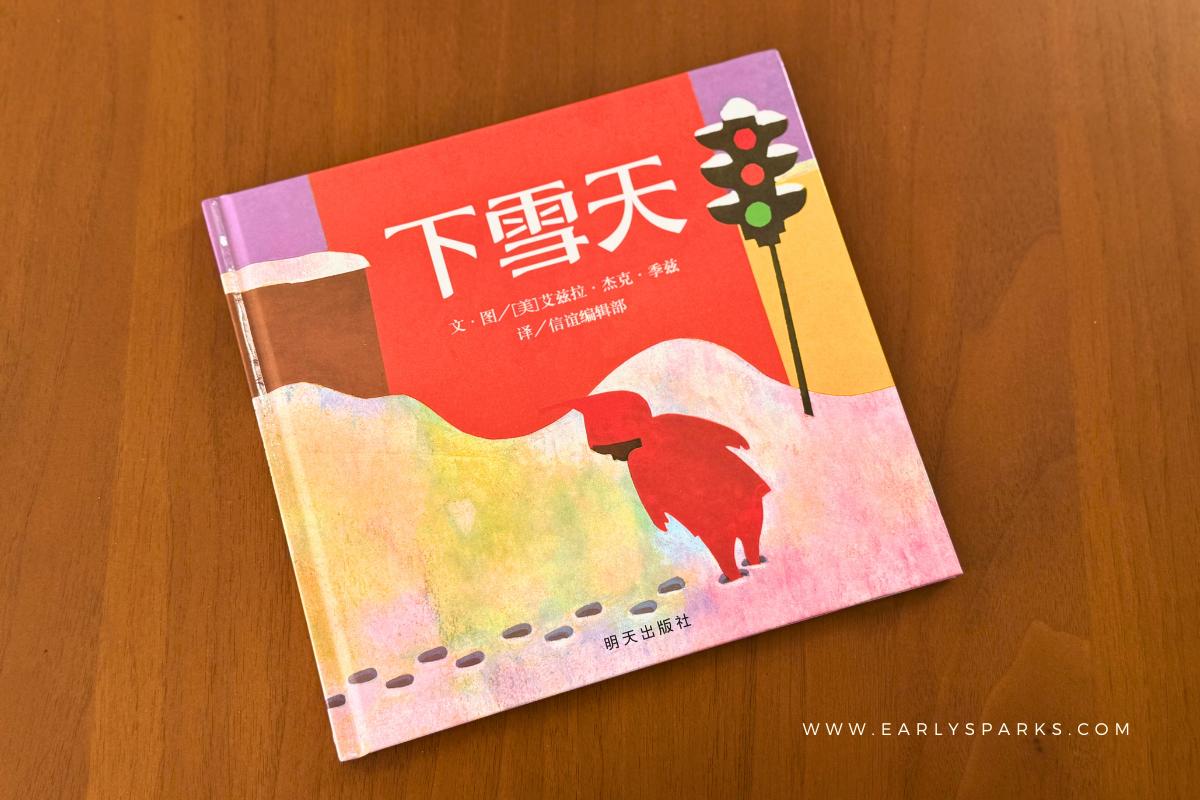
The Snowy Day 《下雪天》by Ezra Jack Keats is a classic winter story that kids instantly connect with. The simple storyline and relatable moments make it perfect for preschool and early elementary Chinese learners.
As you read the story, pause to look closely at the illustrations. Talk about what Peter (彼得) sees, hears, and does in the snow. Invite your child to make personal connection, maybe they’ve wanted to join a snowball fight but felt “too little,” too!
2. Learn Snow-Themed Chinese Vocabulary with Flashcards
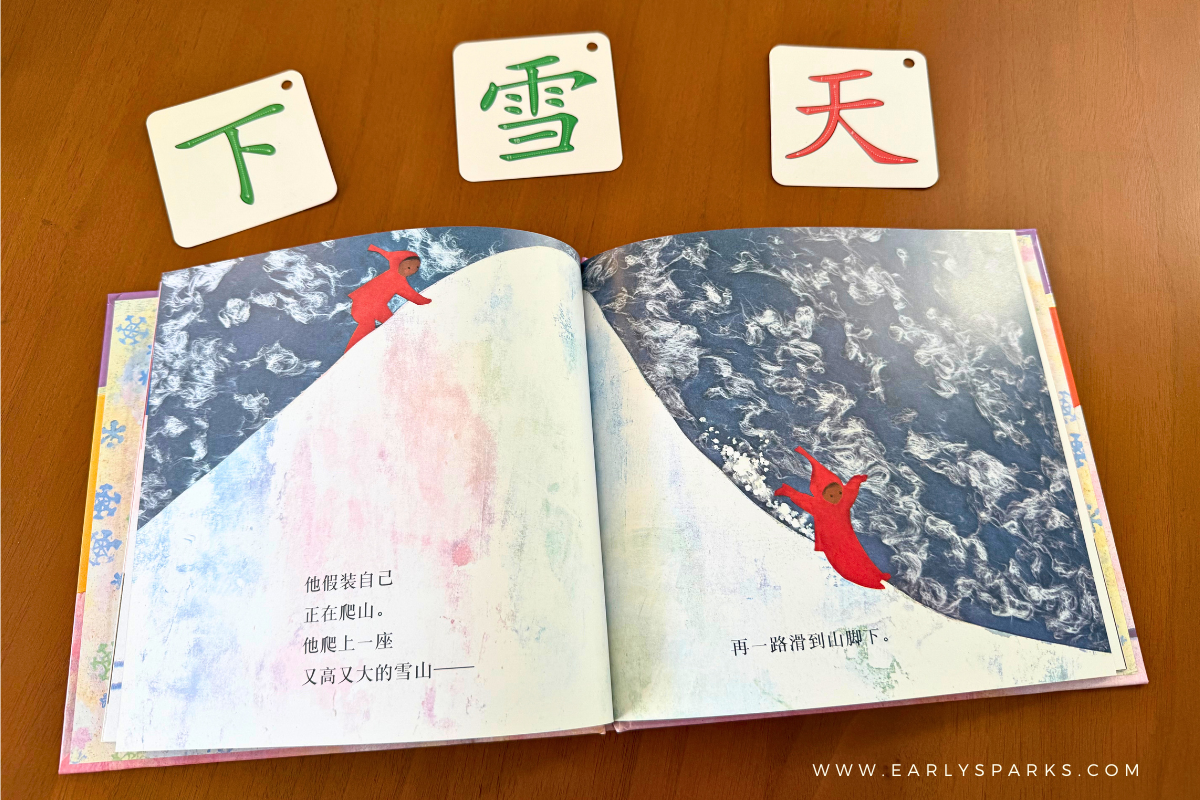
Before reading, introduce winter Chinese vocabulary using picture flashcards. Visual support helps young learners understand and remember new words quickly.
You can practice snow-themed Chinese words such as:
雪 (xuě, snow)
冬天 (dōng tiān, winter)
外套 (wài tào, coat)
下雪 (xià xuě, to snow / snowing)
雪人 (xuě rén, snowman)
雪球 (xuě qiú, snowball)
打雪仗 (dǎ xuě zhàng, have a snowball fight)
雪天使 (xuě tiān shǐ, snow angel)
冷 (lěng, cold)
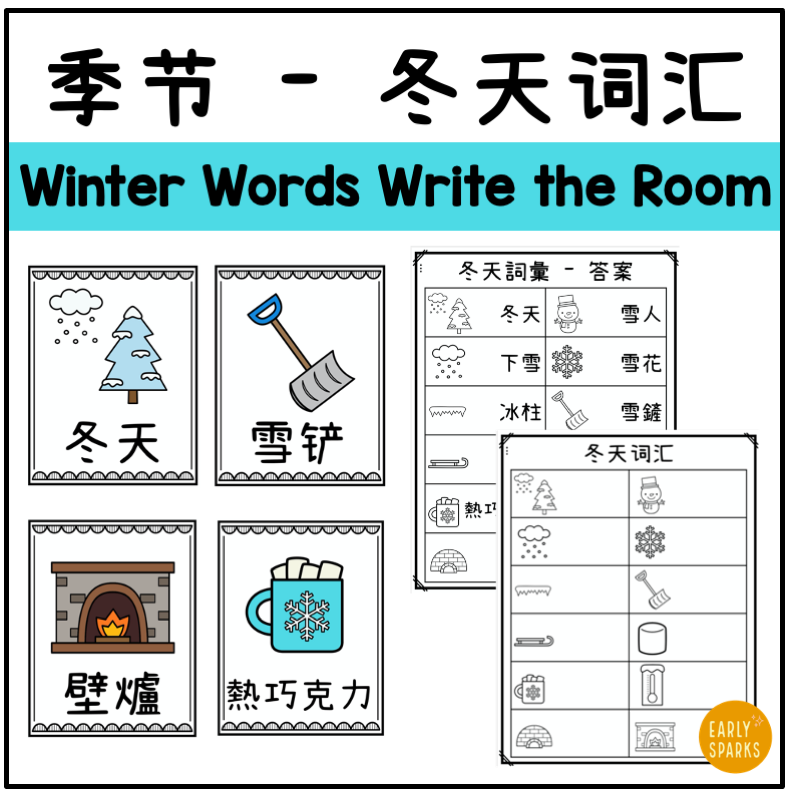
Want ready-made winter Chinese flashcards? Grab them from our shop.
3. Paint the Snow
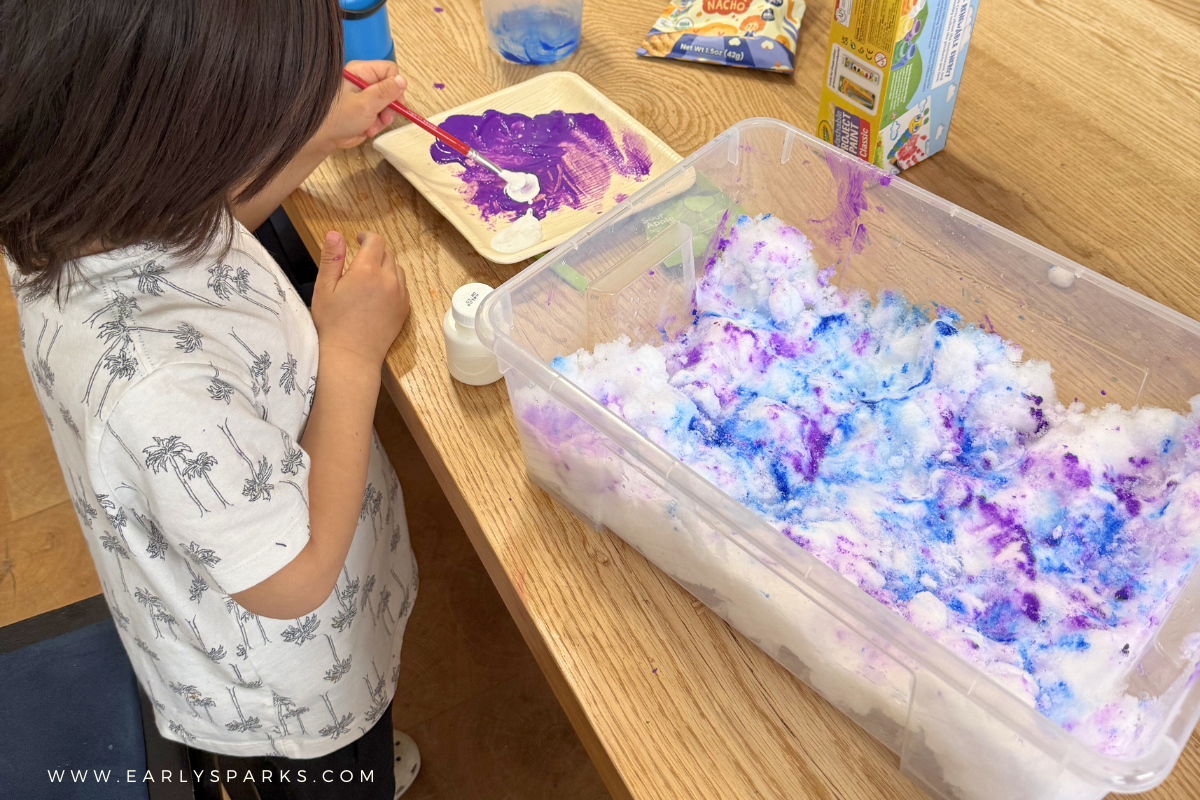
Painting the snow is a magical way to combine art, science, and Chinese learning all in one fun snow day activity! It’s hands-on, engaging, and naturally sparks both creativity and curiosity.
As children paint, they can practice Chinese color words (红色、蓝色、黄色…) and make fun predictions: What happens when the colors mix? What happens when warm water touches the snow? They can shape the snow, observe how it melts and changes, and describe what they see using simple Chinese phrases.
All you need is a bin of fresh snow, Crayola paint, and a few paintbrushes to bring this activity to life at home. It’s a sensory rich, creative way to build meaningful Chinese language skills while staying warm and cozy indoors.
4. Make Winter Crafts: Snowflakes and Snow Globes
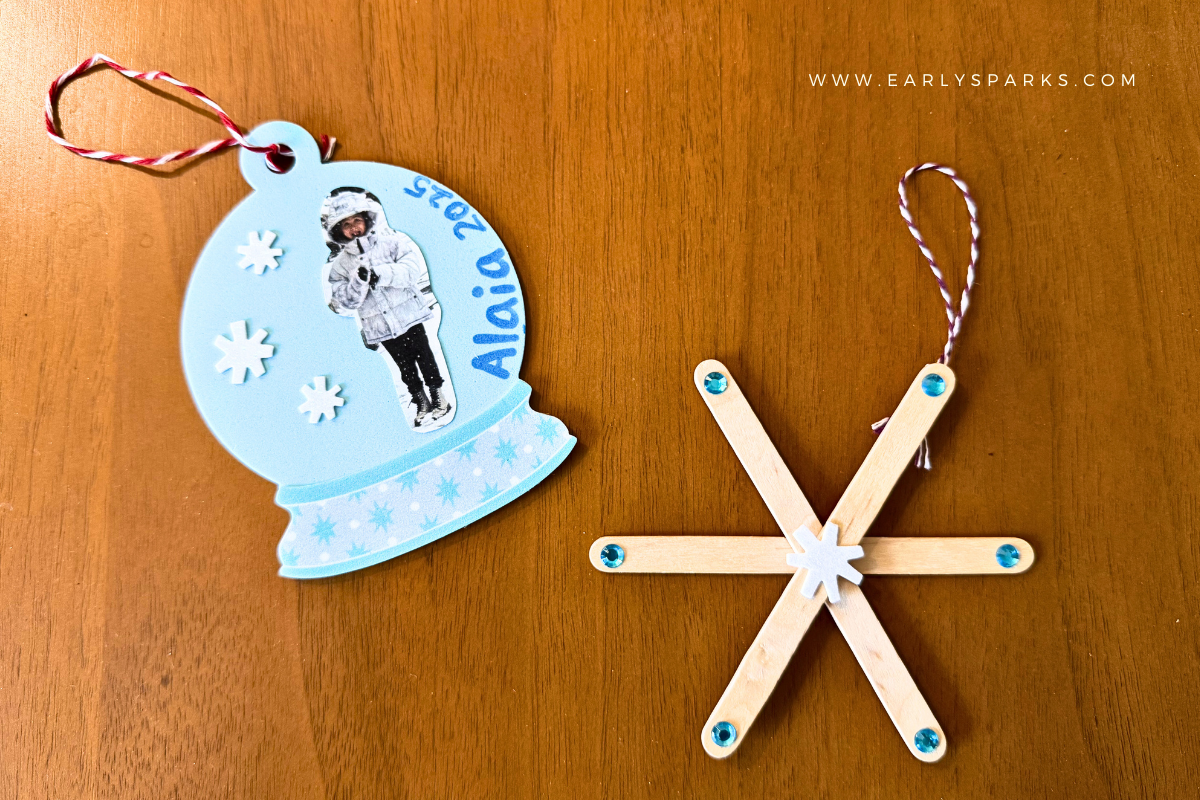
Hands-on crafts make language learning meaningful and memorable! Kids can use popsicle sticks to build their own snowflakes, then decorate them with paint, glitter, gemstones, or stickers. Encourage them to get creative and design a snowflake that’s uniquely their own.
While crafting, practice Chinese color words and simple sentence patterns such as:
这是________(颜色)的雪花
You can also take a photo of your child playing in the snow, print it out, and turn it into a personalized snow globe decoration. Then, kids can write a few simple Chinese sentences to describe the picture, such as:
这是我。我在下雪天玩。今天天气很冷。
These winter crafts become sweet keepsakes while helping kids build Chinese vocabulary and sentence writing skills.
5. Build Vocabulary with a Bubble Map: Words with “雪”
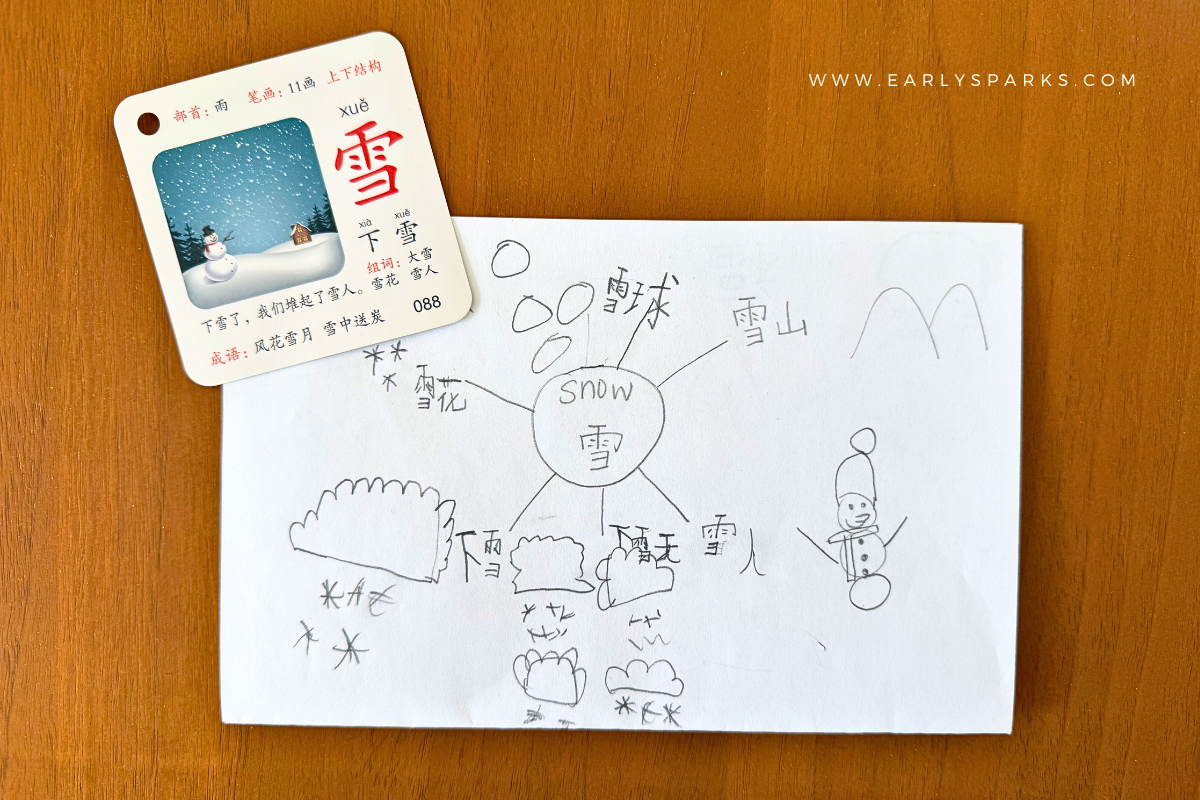
A fun literacy activity for young learners is creating a bubble map with the character 雪 in the center. This visual thinking map helps children see how one character can form many different words.
Start by writing 雪 in the middle of a large chart paper. Then invite students to brainstorm and add related words around it, such as:
下雪 (xià xuě, to snow)
雪人 (xuě rén, snowman)
雪球 (xuě qiú, snowball)
雪花 (xuě huā, snowflake)
雪天 (xuě tiān, snowy day)
雪地 (xuě dì, snowy ground)
雪天使 (xuě tiān shǐ, snow angel)
To make it even more engaging, let kids draw small pictures next to each word or act out the vocabulary.
This simple word-building activity strengthens character recognition, vocabulary development, and word awareness all in a visual and engaging way for young kids.
6. Sing Snow Songs in Chinese
Music is one of the best ways to reinforce new vocabulary! Learning snow-themed songs and singing together make your snow day learning extra fun and memorable.
Some kid-friendly options include:
Singing helps children practice pronunciation, rhythm, and listening skills in a natural way. You can add simple hand motions, act out key vocabulary, or pause to highlight words like 雪 (snow), 冷 (cold), and 冬天 (winter).
Ending your learning with a song creates a warm, joyful vibe, even on the coldest winter day!
Snow days are some of our favorite days for Chinese learning — unhurried, cozy, and full of curiosity. If you'd like more ready-made resources, explore our winter Chinese activity packs in the shop.
Chinese Resources to Make Winter Learning Easier:

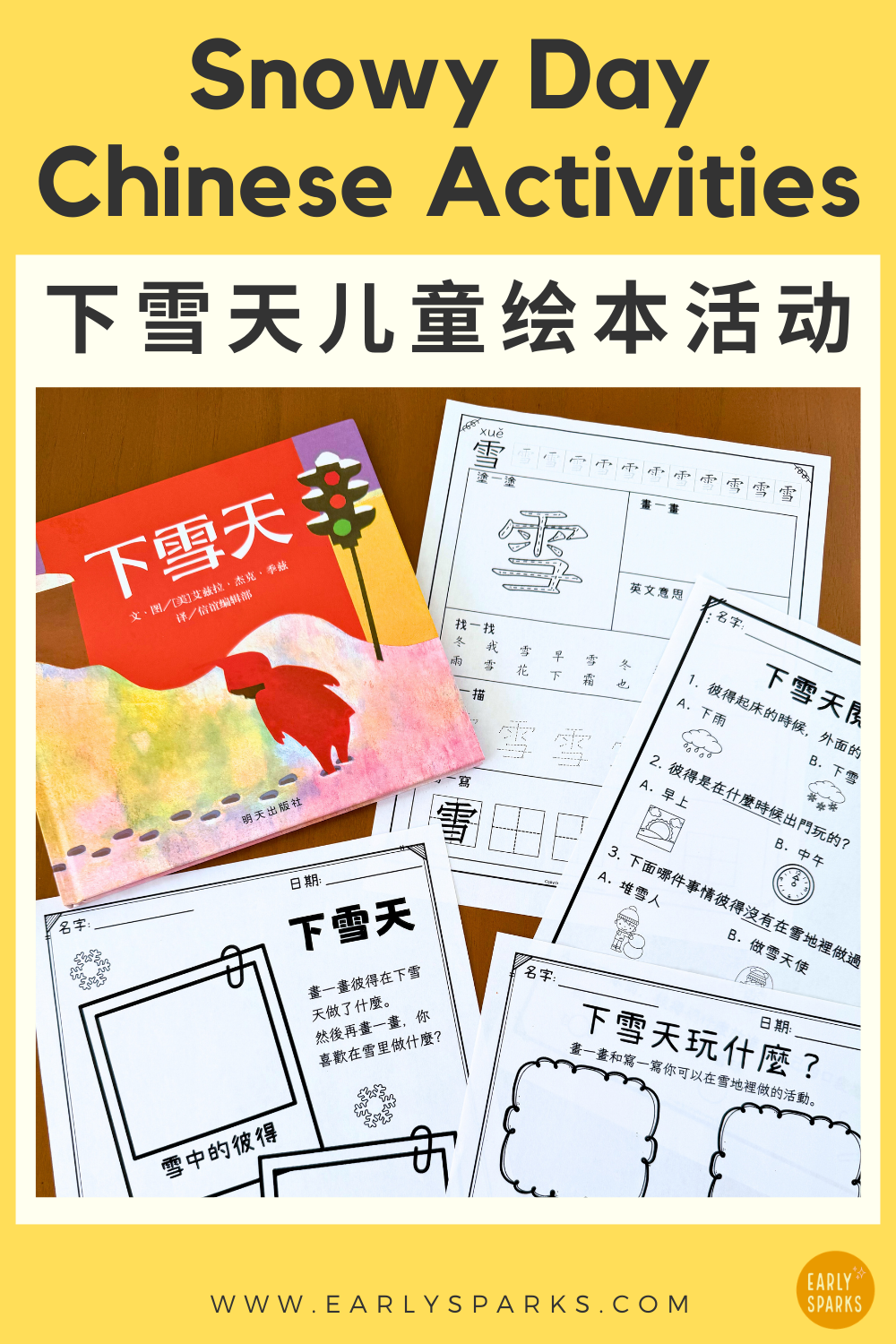
This is the book companion activity for The Snowy Day by Ezra Jack Keats. It's a story about a boy, Peter, who went out to explore his neighborhood after the season's first snowfall. This is the perfect story for your young Chinese learners on a snowy day in winter. Students will read about different things Peter did on a snowy day, and make connections to their life.
这是我们为艾兹拉.杰克.季兹的绘本《下雪天》创作的配套学习材料。这本书很适合在冬天或者是一个下雪天和你的孩子一起阅读。阅读后,老师或家长可以使用这套材料来帮助孩子学习新的中文词汇,提高阅读和写作的技巧。
‼️Please download the file within 24 hours after your purchase. The link will EXPIRE after 24 hours. If the file expired and you couldn’t have access, send us an email at info@earlysparks.com and we will be glad to assist you! ‼️

This is the book companion activity for The Snowy Day by Ezra Jack Keats. It's a story about a boy, Peter, who went out to explore his neighborhood after the season's first snowfall. This is the perfect story for your young Chinese learners on a snowy day in winter. Students will read about different things Peter did on a snowy day, and make connections to their life.
這是我們為艾茲拉傑克 季茲的繪本《下雪天》創作的配套學習材料。這本書很適合在冬天或者是一個下雪天和你的孩子一起閱讀。閱讀後,老師或家長可以使用這套材料來幫助孩子學習心得中文詞彙,提交閱讀和寫作的技巧。
‼️Please download the file within 24 hours after your purchase. The link will EXPIRE after 24 hours. If the file expired and you couldn’t have access, send us an email at info@earlysparks.com and we will be glad to assist you! ‼️